
Here’s my prediction for creative AI:
We’re going to care a lot less about which model made something.
Right now, the AI world spends an enormous amount of energy comparing models.
Veo vs. Runway vs. Kling vs. whatever launches next Tuesday.
And at the current pace, there actually may be something new by next Tuesday.
But I don’t think creators ultimately want to become experts in constantly changing AI model lineups.
They want to create.
Creators Don’t Want Seventeen Separate AI Tools
Today, creating something with AI can mean jumping between platforms.
One tool for writing.
Another for images.
Another for video.
Another for voices.
Another for editing.
Another for upscaling.
Another for whatever became essential sometime between breakfast and lunch.
That’s not a mature creative environment.
That’s a tool collection.
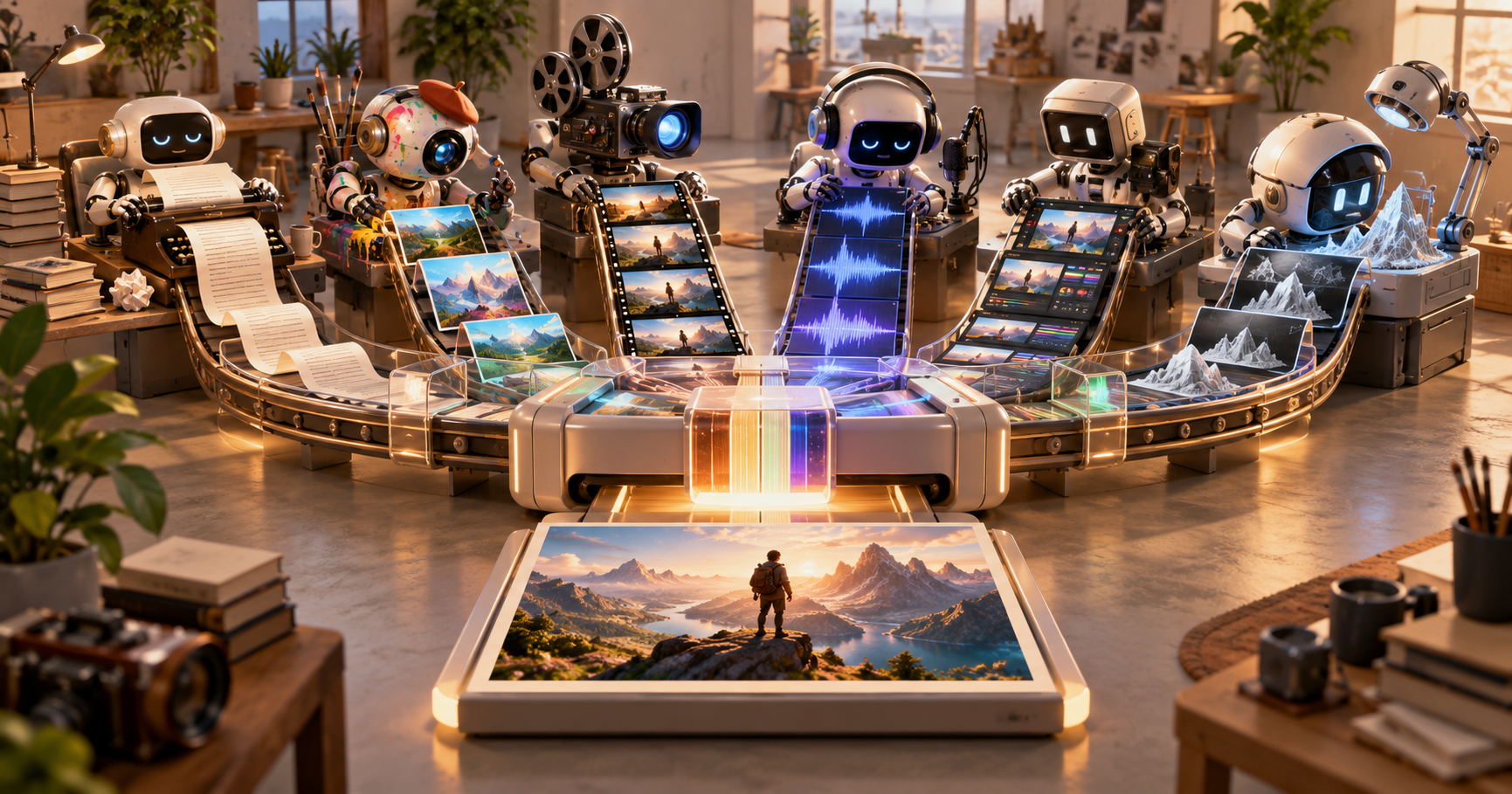
The next phase of AI will be about bringing those capabilities together.
We’re already seeing major creative platforms move toward environments where multiple AI models and capabilities can exist inside one workflow.
That makes sense.
Creators don’t want 17 AI tools and 11 browser tabs open just to make one shot.
They want one creative environment that gives them the right tool at the right moment.
The Model May Become Infrastructure
Eventually, debating individual AI models may feel a little like arguing about which manufacturer made the drill.
Professionals care whether the drill works.
They care whether it’s reliable.
They care whether it gives them the result they need.
But the drill itself isn’t the project.
AI models may gradually move into that same role.
Powerful.
Essential.
Mostly invisible.
The creative experience will happen one level above them.
That means the most valuable AI platforms may not necessarily own the single best model.
They may be the ones that understand how humans actually work.
The model may become a commodity.
The workflow is the product.